Good educational games might actually be possible
I challenge you to find a good mental arithmetic or phonics game. Not merely serviceable, but one that kids love and keep coming back to. One that will get them voluntarily doing more maths or reading than they’ve done before, with more learning per minute. And one that fits coherently with the evidence on how children learn.
The lack of good options shows it’s surprisingly difficult. However, the experience of building games for my son has convinced me that good educational games are possible.
What are the characteristics of the best educational games?
A few things come together in the best educational games:
-
The game is fun
-
The only way to have fun is by learning
-
The player learns the intended thing
-
The gameplay mechanic encourages a high rate of learning, and time is not wasted elsewhere
This is perhaps clearer by considering counterexamples:
In Reading Eggs, something amusing often happens when you get an answer wrong. My kids literally ask me whether they’re allowed to get one wrong. Add in load times, time wasted collecting coins and mini video rewards, and you waste a lot of time.1
In my vocabulary building game, once the definitions have been seen a few times, the player develops a mental ‘keyword in definition’ → ‘correct answer’ shortcut that means they can get the answer right without knowing the full definition, e.g. ‘ingredients’ → ‘concoction’, or ‘music’ → ‘serenade’.2
In Times Tables Rockstars, the fun part of dressing up your rockstar is separate from doing the maths, and is time taken away from learning. It’s a barely disguised worksheet with a separate reward mechanism.
The aim need not be to make the maths itself fun
Importantly, we don’t need to make maths or reading itself fun: many non-educational, commercially successful games involve drudgery. But the game loop around the learning must be fun, and it should reward you more as skill increases. For instance, The Typing of The Dead is excellent, not because typing is fun, but because killing more zombies faster is fun3. The only way to have fun is to get good at typing - it’s so intrinsic to the game mechanic that you can’t really be distracted by the zombies.
The goal should be retrieval practice, not discovery based learning
This list also helps us understand why discovery based learning games are much harder to pull off, for many of the same reasons why discovery learning is ineffective in the classroom: You do not have enough control over what they will do in the game, or what they will learn. Children will always find creative and fun things to do they’re not meant to4 and so they’re unlikely to learn quickly.
So what are games good for? A good game can keep a child focussed for longer, and make them want to do more learning per minute, and make them actually enjoy it. This makes them well suited for retrieval practice which is very important but - let’s be honest - is pretty boring. If you doubt whether a game can make a kid want to go faster, just watch this video.
This has been a revelation in my household: rather than having a fight over homework, my son asks whether he can have screen time to do his maths!
So it is possible then?
I’ve built several small games for my son. They’re by no means perfect, but I think they get close enough to demonstrate that good games are possible. All are free, with no ads or signup:
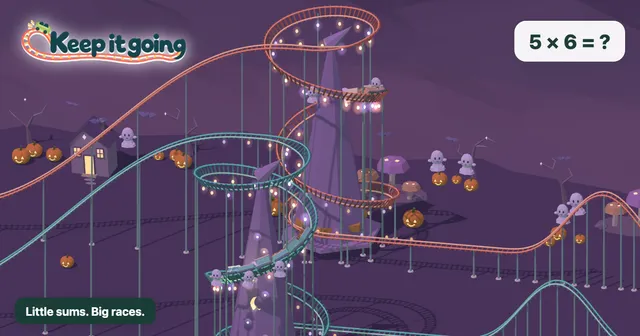 Keep It Going
A rollercoaster train rides through increasingly exciting and complex track sections in different ‘worlds’. You must answer times tables questions to keep it going. You lose when it stops.
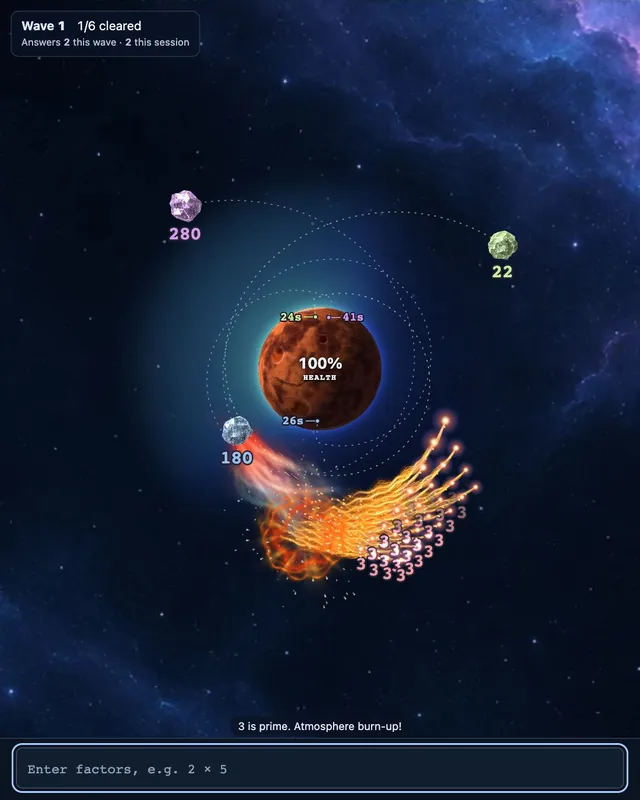 Factoroids
Protect your planet by factorising the numbers in incoming asteroids. Factoring larger numbers and factoring faster result in more impressive explosions and chain reactions. Cooperative multiplayer is available for more chaos.
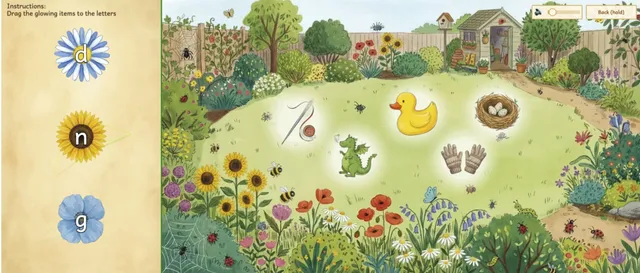 Bee Letters
Learn letter sounds by dragging pictures to the correct letter. Correct answers are rewarded by an appealing spirograph animation.
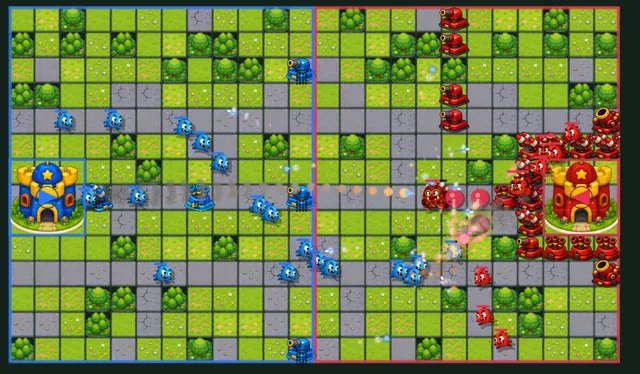 Arithmetic Annihilation
Answer maths questions to build towers and defend your base.
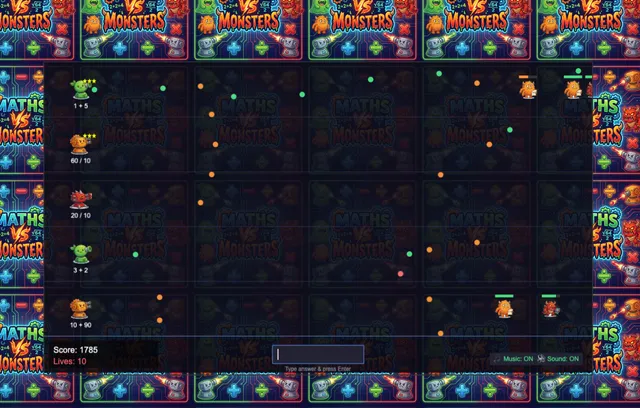 Maths vs Monsters
A ‘plants vs zombies’ style game where you must solve maths questions by building and upgrading towers. Towers are reset at the end of each round to prevent building towers and then just watching them.
From playtesting these games with my kids, I’ve found they have staying power: my son has played them for many months, often voluntarily doing over 100 mental arithmetic questions a day.
Now is the time to make things better
The goal of many ed-tech companies is to maximise revenue, not end-user (child) experience. For instance, spag.com is a poor experience for children, but makes life easy for teachers by reducing marking. Developers are often optimising for the wrong thing.
But even without commercial incentives, it’s very hard to optimise for the right things. The BBC is not trying to make money out of Karate Kats and Dance Mat Typing, so why are they so bad? I suspect there’s just too much distance between the players and the developers - and it’s hard to assemble a team who are enthusiastic about educational games and empowered to make them good.
Contrast that to DragonBox Algebra - a passion project by a maths teacher. It’s the most inventive and probably the best maths game I’ve ever played. But how many maths teachers have the time and energy to spin up a development company?5
This is where I think the big opportunity lies. AI assisted coding means that anyone can now bring their ideas to life in a few days. And this means that anyone with a passion can optimise for the right things, put their ideas in front of kids, and iterate quickly.
Do you have any suggestions?
I’d love to hear from you if you’re passionate about educational games, have any recommendations of great games, or have suggestions for improving the games I’ve made. Contact details here.
Footnotes
-
That’s not to say Reading Eggs is bad: I’m a paying customer and both my kids have successfully used it to learn phonics. ↩
-
Thanks to Adam Boxer for tipping me off to this blog post that makes this point. ↩
-
Typing of the Dead is a nice example of this. ↩
-
This American Life has an amusing story of children figuring out they could use comments on NPR podcasts on Spotify to chat. ↩
-
Sadly Kahoot bought this excellent game and it now requires a paid subscription, so I can no longer recommend it. ↩